


Episode 645: How to Get Booked on Podcasts: The Pitch Strategy With a 30% Booking Rate (3X the Industry Average)
Oct 05, 2026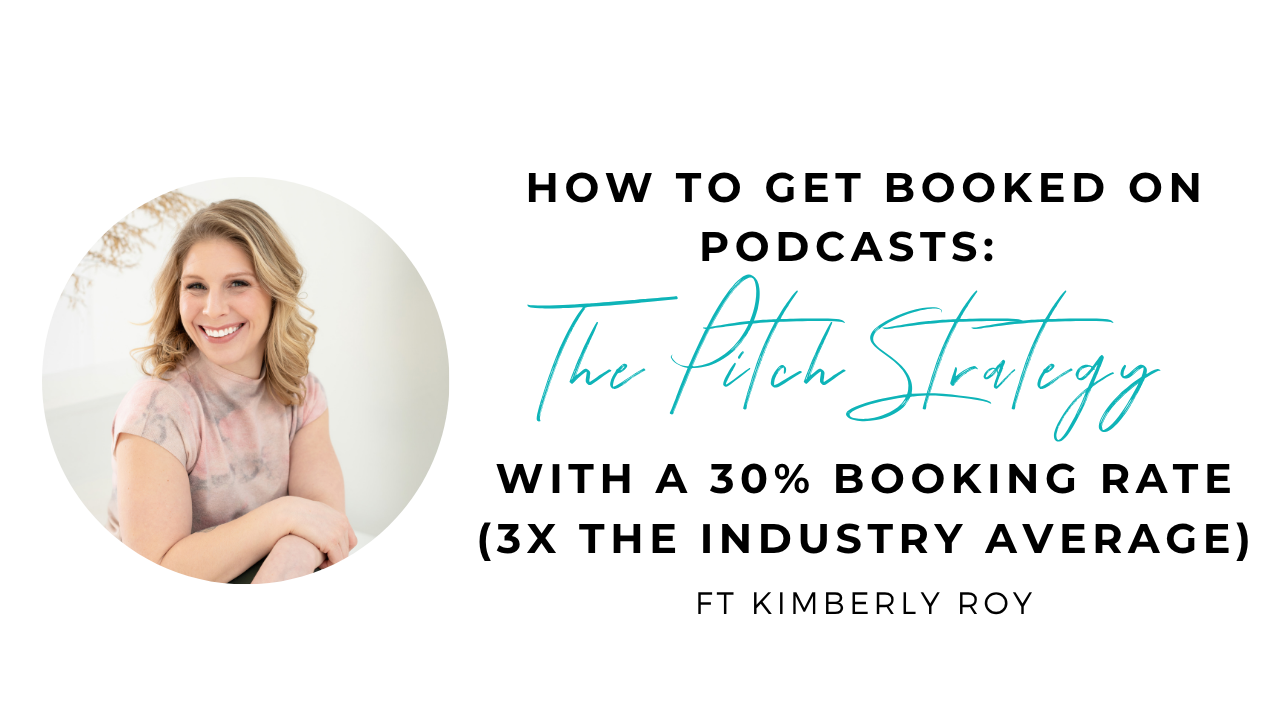
You send a podcast pitch and hear nothing back. Kimberly Roy places entrepreneurs on podcasts at a booking rate above 30%, and she says the fix starts with skipping the template. She walks Holly through her three-part pitch built on angle, fit, and proof. Kim also spoke at the Collective Co-Op Fall Fest Retreat and is part of the Co-Op family.
About Kimberly Roy
Kimberly Roy is a visibility and podcast pitching strategist and the founder of Pitch With Kim. She spent 20 years in corporate banking before building a business that places entrepreneurs on podcasts, and her booking rate is above 30%. She holds a Bachelor of Science in Business Management from the University of Maine at Fort Kent. Her pitching approach has three parts, angle, fit, and proof, and she does not use templates. She now teaches female coaches, creatives, and service providers how to use their voice and story to land the right podcast guest spots.
How to get booked on podcasts without a pitch template
Podcast pitching is one of the questions Holly hears most inside Anti-Social School™, so she brought in an expert. Kimberly Roy, founder of Pitch With Kim, reports a booking rate above 30% and does it without pitch templates. Her method has three parts. The angle is your positioning: who you serve, what you do, and the value you bring the audience. The fit is whether a show's listeners match the people you want to reach. The proof is your lived experience and story, which she puts ahead of your bio.
This episode makes the case that chasing every big podcast is the slowest way to grow as a guest. A smaller show full of your ideal clients can pay off more than a large show where only a sliver of the audience is a match. Kim shares how she vets a podcast: is it active, does it take guests like you, and what topics have past guests covered. She also uses AI to build research lists and prompts, then checks every show by hand, and she names Listen Notes as a free place to start.
Then comes the pitch itself. Kim's number one rule is to start with the host and their audience and say what is in it for them. She says about 60% of yeses come from follow-ups, and she suggests two to three before you move on, switching channels if you hear nothing. Kim also talks about finding your golden thread, building your capacity for vulnerability, and using three deep breaths to reset after a big day of visibility work.
Don't start with yourself first. Your pitch is not about you.
Kimberly Roy
Key takeaways from this episode
- About 60% of podcast pitch yeses come from follow-ups, according to Kimberly Roy.
- Two to three follow-ups is the safe range for a podcast pitch, and Kim suggests switching channels, such as a voice note, text, or DM, when email gets no reply.
- A booking rate above 30% is what Kimberly Roy reports for her podcast pitching clients.
- Kim's pitch has three parts: angle (your positioning), fit (audience alignment), and proof (your story).
- A smaller podcast whose listeners are all ideal clients can bring a better return than a large show where only a small fraction of the audience is a match.
- Listen Notes is a free tool for checking a podcast's ranking, past guests, and topics, and you do not need a paid account.
This episode is for you if
- You want to get booked as a podcast guest, but your pitches keep going unanswered.
- You feel nervous about pitching yourself and sharing your story with a bigger audience.
- You are chasing big-name shows and want a better way to choose podcasts that bring in clients.
Tune in to hear:
- Why time leadership works better than time management in a life-first business
- How Kim went from corporate banking to podcast pitching
- What the golden thread is and why your story sets you apart
- Why nerves are normal and how to build your capacity for vulnerability
- Kim's three-part pitch: angle, fit, and proof
- Why Kim does not believe in pitch templates
- How to use AI for podcast research without copying and pasting its list
- How to vet a show: is it active, does it take guests like you, and what topics has it covered
- How to research podcasts for free with Listen Notes
- Why Kim's number one pitching advice is to start with the host and their audience
- How many times to follow up, and how to follow up in a new way
- How Kim recharges after visibility work with three deep breaths
My objective when I work with my clients, yes, it's getting the yes on that show, but it is not the volume, it is the alignment.
Kimberly Roy
Episode chapters
- 00:00 Welcome and who Kimberly Roy is
- 01:30 Time leadership and a life-first business
- 04:30 From corporate banking to podcast pitching
- 07:30 Nerves, vulnerability, and the golden thread
- 10:30 The angle, fit, and proof pitch
- 16:30 Choosing the right shows over the biggest shows
- 21:00 Research tools and using AI without copying its list
- 25:30 Pitching advice: start with the host
- 30:00 How many times to follow up
- 33:00 Breath work and where to find Kim
But when we put ourselves out there, we are actually giving other women permission to do the same.
Kimberly Roy
Connect with Kimberly:
Website: https://pitchwithkim.com/
Instagram: https://www.instagram.com/pitchwithkim/
Visibility Audit - Book your free call here: https://pitchwithkim.myflodesk.com/visibility-audit
🔗 LINKS MENTIONED:
🤝 2027 Collective Co-Op - www.hollymariehaynes.com/coop
🎯 Access to the Backstage Pass 2027: www.hollymariehaynes.com/backstagepass
🌎 Website → hollymariehaynes.com
📲 Instagram → @thehollymariehaynes
🗨️ Chat with Holly → hollymariehaynes
Listen to this episode
Find Crush the Rush wherever you listen, and subscribe so the next episode finds you.
Apple Podcasts · Spotify · YouTube · every episode of Crush the Rush
Frequently asked questions
Who is Kimberly Roy?
Kimberly Roy is the founder of Pitch With Kim, a visibility and podcast pitching business for female entrepreneurs. In this episode she explains how to get a yes from podcast hosts, from choosing the right shows to following up. She came to pitching from corporate banking, after finding her own voice through starting a podcast.
What is Kimberly Roy's angle, fit, and proof pitching method?
Angle, fit, and proof are the three parts Kim checks in every podcast pitch. The angle is your positioning: who you serve, what you do, and the value you bring the audience. The fit is whether the show's listeners match your ideal clients and whether you match the show. The proof is your lived experience and story, and Kim says a bio-led pitch does not set you apart, so lead with your story.
Is it better to pitch big podcasts or small ones?
Kim says to pitch for audience fit first and size second. A smaller show whose listeners are all your ideal clients can bring a better return than a large show where only a small fraction of the audience is a match. She also says you build your reps before you aim at the biggest names, because you cannot go from zero to a hundred. Big shows have their place, and she suggests you avoid putting all your eggs in one basket.
How do you find and vet podcasts to pitch?
Start with your own research, then check every show by hand. Kim looks at whether the podcast is still active, whether it takes guests like you, and what topics past guests have covered. Listen Notes is her free starting point, since you do not need a paid account to see a show's ranking and guest list. She also suggests listening to a few episodes to check the host's tone and whether you would be a fit for them.
How many times should you follow up on a podcast pitch?
Two to three follow-ups is the range Kim recommends, and then you move on. She says following up matters because about 60% of yeses come from follow-ups, so never pitch and ghost. Pitching is relationship based, so use your intuition and try a different channel if email gets no reply, such as a voice note, text, or DM. One of her clients almost quit following up on a host who had said yes, and the silence turned out to be an email tech issue.
Can you use AI to write a podcast pitch?
Kim uses AI as a thought partner for research and prompts, and she says copy-pasting a pitch from AI is where many bad pitches come from. AI only knows what you feed it, so give it your angle, fit, and proof before you ask for anything. She also says not to rely on the list AI gives you, because you still need your own vetting to check that a show is active and takes guests like you. Holly adds that the worst pitches she gets are long, templated emails with a placeholder where the episode title should be.
Curious what is actually standing between you and consistent income in your business? Take the free 2-minute quiz and find out where the gap is. hollymariehaynes.com/quiz 💛