
Visible But Not Booked? 4 Experts Share What to Fix First
Nov 10, 2026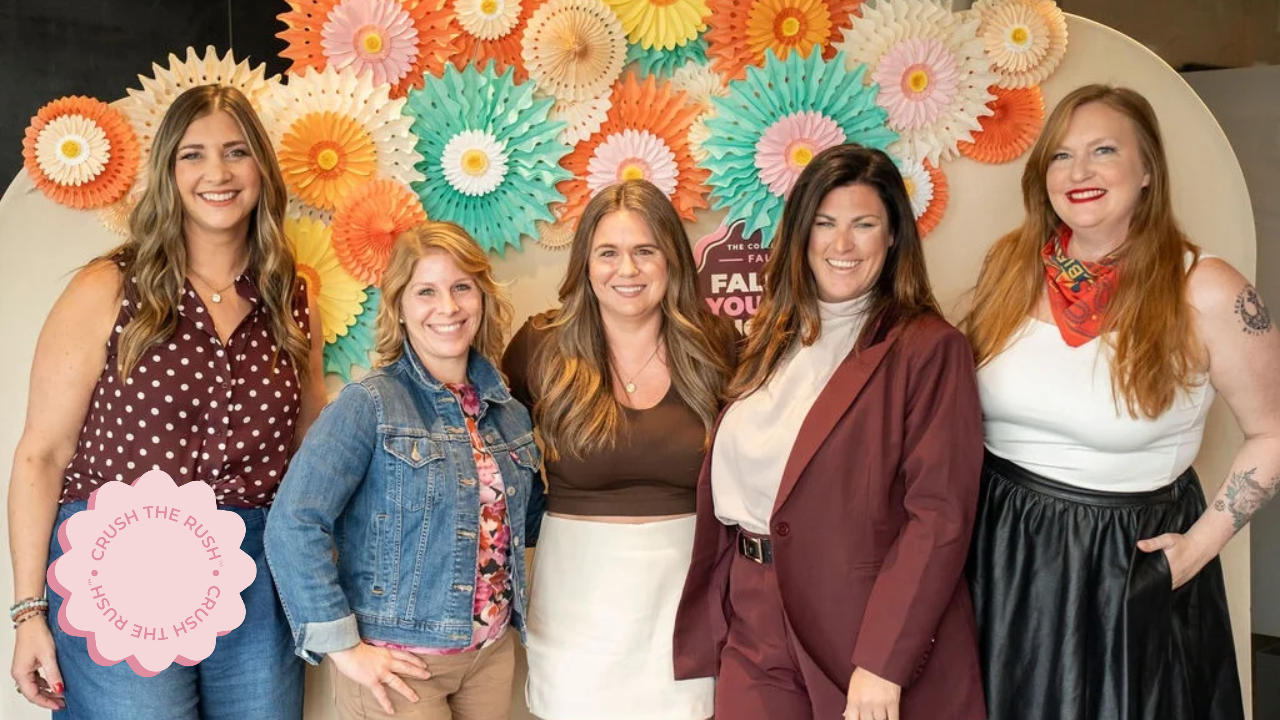
You pitched the podcasts. You posted the carousels. You ran the launch. And your calendar still has open spots where clients should be.
If you are visible but not booked, you did the work the advice told you to do, and the results did not follow. That is a maddening place to be, and it is one of the most common places I see smart women land.
So at our Collective Co-Op retreat, I put that exact question to four people who spend their days getting other businesses seen. I asked them what to fix first when pitching, posting, and launching are not working.
Here is who answered:
- Madeline Hornung owns a marketing agency that handles SEO, website design, content creation, and social media management.
- Cait Howard founded Amplify Boutique, a podcast and YouTube launch management agency she has run since 2019.
- Kimberly Roy is a visibility and pitching strategist and the founder of Pitch With Kim.
- Whitney Abraham owns a marketing agency that handles everything from social content to full-scale launches.
I have spent 22 years in corporate strategy and built a 7-figure business on a part-time schedule, and I still learned something new in this room. Below is what they said, organized so you can find your own gap fast, plus what I would do with it.
Why You Are Visible but Not Booked: 3 Checks to Run First
Visible but not booked usually means the gap sits in one of three places: your proof of concept, your rooms, or your definition of "working." The panel kept coming back to these before anything else.
1. Did you have proof of concept before you launched?
Market research and early proof matter more than most of us want to admit. If you launched an offer no one had told you they wanted, more visibility only shows more people something they were not looking for.
2. Is your time going to the right rooms?
Ten pitches to the wrong audience will lose to two pitches in front of the people who actually buy from you. Where you show up matters as much as how often.
3. How do you define working?
Sales and inquiries can grow while downloads and followers stay flat. If you only watch the vanity numbers, you can miss the fact that your business is already moving.
Here is a quick way to run the check:
| Symptom | What to check | First move |
|---|---|---|
| Lots of views, few inquiries | Proof of concept and trust | Talk to 5 past clients about why they said yes |
| Lots of pitches, few yeses | Your rooms and your pitch | Aim at podcasts and events your ideal client already follows |
| Launch fell flat | Your numbers and your list warmth | Work backward from your goal using percentages |
| Followers up, sales flat | What you count as working | Track inquiries and sales, not just reach |
How to Know What a Good Number Looks Like
The best way to set a realistic goal is to work backward from the result you want, using percentages instead of raw numbers. This is the section I would screenshot.
Here is the panel's example. If you want 10 buyers from a free masterclass, you need well over 100 people in the room. If you only plan for 20 attendees, the math was never going to work, no matter how good your masterclass is.
Pitch success rates dropped
Kimberly Roy shared that the industry average success rate for pitches fell from around 10 to 15 percent last year to 5 to 10 percent this year. That means a lot of the no's you are getting are normal.
Her takeaway is one I keep coming back to: a no is a not yet.
Your list history changes your math
Look at your own numbers, too. A list you have not warmed up will not convert like a list you have been nurturing for years. If you are comparing your first launch to someone else's tenth, you are measuring the wrong thing.
Here is the backward math as a simple framework:
| Step | Question to answer |
|---|---|
| 1 | How many buyers do I want? |
| 2 | What percent of leads usually buy from me? |
| 3 | How many leads do I need to get that many buyers? |
| 4 | How many pitches, posts, or emails does it take to get those leads? |
Trust Is the Currency of Conversion
Trust is the currency of conversion, which means more eyes on your content only helps if people already see you as an easy yes. This idea showed up in almost every answer.
If you have followers who like your content but never inquire, the missing piece usually sits between the follow and the sale. People need a reason to believe you can solve their specific problem.
Here are ways to build that trust without posting more:
- Share proof in your own words, like a client result or a before-and-after story
- Show your face and your voice in places people already trust
- Reply to people personally instead of sending a template
- Follow up after you meet someone, with something useful
Cait Howard said it best:
"Sometimes the unscalable is actually the most impactful, like the voice notes."
I love this because it flips what most of us think. We spend so much energy looking for the scalable system that we skip the five-minute voice note that would have booked the client.
How to Track What Is Working When Podcast Analytics Are Thin
Podcast analytics tell you very little, so track results with UTM links in your show notes and one question on every application: "How did you find me?" Cait Howard explained why the numbers are limited, and her workaround costs nothing.
Here is the simple setup:
- Add a trackable UTM link to your podcast show notes
- Use a different link for each podcast or event you appear on
- Ask "how did you find me?" on every application, booking form, or discovery call
- Review the answers monthly and put more time into the sources that show up
This also fixes the "how do I define working?" problem. When you track where clients come from, you stop guessing which room paid off. You can see it.
What AI-Made Content Does to Your Visibility
People scroll past content that looks AI-made, and the panel said AI-written pitches are a big reason pitches get a no. I was glad to hear a room full of marketers say it out loud.
One panelist shared a story I think about often. She saw a friend's AI-made carousel, kept scrolling without reading a word, and she normally wants to hear from that person.
The panel agreed on what stops the scroll instead: real, slightly messy content. Video and writing in your own voice earn attention that polished-but-generic content does not. Kimberly Roy put it plainly:
Authenticity leads time and time again.
I use AI in my business every week to save time, so I am not telling you to avoid it. Use it for the heavy lifting like outlines, research, and first drafts. Then make sure your own voice and face show up before anything goes out.
Quick gut check before you hit send on a pitch or post:
- Would I say this out loud to a friend?
- Does it include a detail only I would know?
- Could another business owner copy and paste this word for word?
Audio Only or YouTube? How to Get Comfortable on Camera
There are no rules for audio versus video, so start with your goal. The panel gave a clear way to decide.
When audio only makes sense
Audio has a lower barrier if you are nervous on camera. It works well when your goal is nurturing people who are already in your world.
When YouTube makes sense
YouTube gives people another way to find you. I shared that YouTube Shorts is my highest downloaded platform, even though I only upload repurposed videos.
Easy ways to ease into video
If the camera makes you nervous, start small:
- Post a few Instagram stories
- Try green screen reels
- Record voiceovers over images or slides
Each step gets you used to seeing and hearing yourself before you commit to long-form video.
How to Find the Right Rooms, Build Your Own, and Follow Up
The right rooms are the places your ideal client already spends time, rather than rooms full of people who do what you do. This shift changes who sees you.
Start with your own network. Then look outward.
Where to show up
- Speak at events your ideal client attends
- Guest on podcasts your ideal client listens to
- Join communities where buyers gather, along with your peers
Build your own room
When the right room does not exist, make one. The panel's examples included a conference, a dinner, or a retreat. Our Collective Co-Op retreat is a living example of this idea, and it is the reason this conversation happened.
Follow up after you meet someone
Meeting someone is step one. The panel suggested following up by DM, voice note, or a walk-and-talk call, and offering something useful in return.
Expect it to take time. One panelist said her high-touch work often takes about a year to turn into business. Relationships need a runway, so follow up and let go of the timeline.
The One Move Each Panelist Would Make in the Next 90 Days
I closed the panel by asking everyone for the single move they would make in the next 90 days to get visible. The answers covered four different directions:
- Video: Show up on camera so people see and hear the real you
- Collaborations: Partner with people who already have your ideal client's trust
- Speaking outside your usual niche: Get in front of new audiences who have never heard of you
- Turning a launch into a docuseries: Share the real process of building and launching, along with the polished result
Pick the one that makes you slightly nervous and slightly excited. That is usually the right one.
Here's How to Get Started
- Run the three checks. Look at your proof of concept, your rooms, and how you define working.
- Work backward from your goal. Write down the buyers you want, then the leads and outreach it takes to get there.
- Set up tracking. Add UTM links to your show notes and a "how did you find me?" question to every application.
- Send three voice notes this week. Pick people you met recently and offer something useful.
- Audit your AI-made content. Rewrite anything that sounds like it could belong to anyone.
- Choose one 90-day move. Video, collaborations, speaking, or a docuseries. Put it on your calendar.
- Follow up with one person from a room you have been in. Then let go of the timeline.
Ready to Find Your Gap?
If you want to know what is standing between you and consistent income, take my free 2-minute quiz at hollymariehaynes.com/quiz. It shows you where your gap is so you can fix the right thing first. 💛
Want to hear the full conversation? Listen to Episode 649 on the Crush the Rush™ Podcast, and if you want to be in the room for next year's retreat, take a look at the 2027 Collective Co-Op. You can also explore Anti-Social School™ to build a marketing system that does not depend on social media.
XO, Holly
Frequently Asked Questions
Why am I visible but not getting booked?
You are likely visible but not booked because of a gap in proof of concept, audience fit, or trust. The panel suggested checking three things. First, whether you did market research before you launched. Second, whether your pitching time is aimed at the right rooms. Third, what you count as working, since sales and inquiries can climb even when downloads and followers stay flat. Trust matters most of all. People need to see you as an easy yes before more visibility turns into bookings.
How do I know what a good number is for a launch or lead goal?
Work backward from your goal and use percentages instead of raw numbers. The panel's example is a free masterclass, where getting 10 buyers usually takes well over 100 people in the room. Kimberly Roy added that the industry average success rate for pitches fell from around 10 to 15 percent last year to 5 to 10 percent this year. Also look at your own history, because a list you have not warmed up will not hit the same numbers as one you have been nurturing.
Does AI-generated content hurt your visibility?
Yes, according to the panel, because people scroll past content that looks AI-made. One panelist shared that she saw a friend's AI carousel and kept scrolling without reading a word. The panel also said AI-written pitches are a big reason pitches get a no, while real, slightly messy video and writing in your own voice stop the scroll. Using AI tools to save time is fine as long as your own voice and face still show up in the final version.
Should my podcast be audio only or on YouTube too?
Start with your goal, because the panel said there are no rules. Audio only is a lower barrier if you are nervous on camera, and it works well for nurturing people already in your world. YouTube gives people another way to find you. I shared that YouTube Shorts is my highest downloaded platform even though I only upload repurposed videos. If you want to ease into video, try Instagram stories, green screen reels, or voiceovers first.
How do you get into the right rooms to be seen?
Start with your own network, then look for rooms where your ideal client spends time. The panel's examples included speaking at events, guesting on podcasts your ideal client listens to, and building your own room with a conference, dinner, or retreat. After you meet someone, follow up by DM, voice note, or walk-and-talk call, and offer something useful in return. Expect it to take time, since one panelist said her high-touch work often takes about a year to turn into business.