How I Built a Life-First Business as a Twin Mom
Jun 03, 2026
From Corporate to CEO: How I Built a Life-First Business Without Sacrificing My Family
I hired a business coach before I had a business.
Yes. A big investment. No income. No product. No audience. No plan, really. Just a corporate salary covering the bill and something inside me that said: this matters.
I was 41 years old. I had twin girls in kindergarten. My husband had left his job to stay home with them because two newborns in daycare was not happening. And I was sitting in my corporate strategy role thinking... I love this work. I love these people. But this schedule will never let me be the mom I want to be.
That was January 2020.
Two months later, the world shut down.
The Bus Stop Dream
Before I tell you how the business started, I need to tell you why.
Because my "why" wasn't a revenue goal. It wasn't freedom. It wasn't even passion. It was a bus stop.
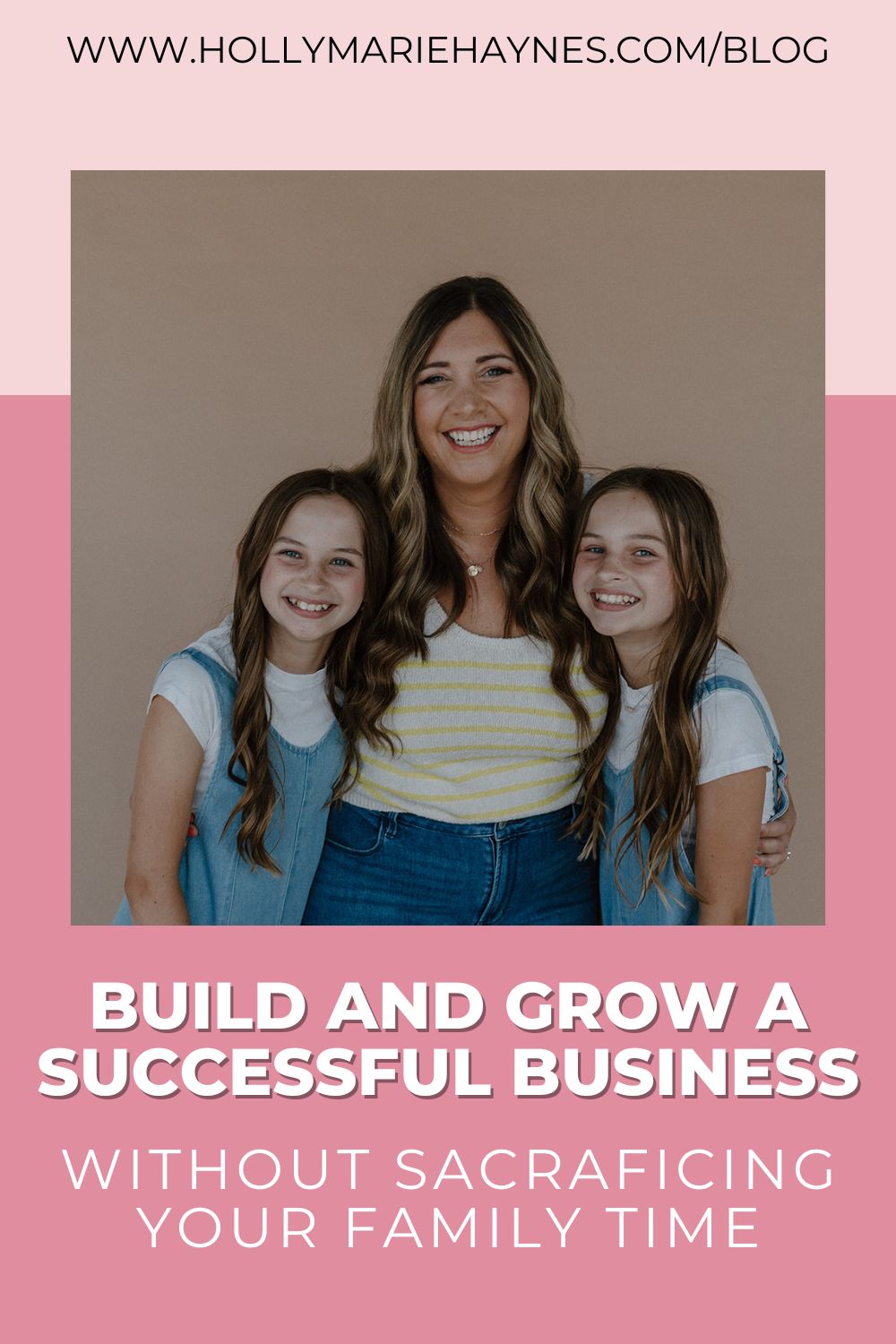
I just wanted a schedule where I could put my girls on the bus in the morning and be there when they got off in the afternoon.
That was it.
I didn't need the fanciest business model. I didn't need to be "known." I wanted to say yes to a mid-day dentist appointment. I wanted to be the parent at the bus stop.
Consulting did not support that version of motherhood. And I wanted both.
I loved my corporate job. I loved my team. Some of my best friends came from those years. But the lifestyle didn't match. So entrepreneurship became the way I thought I could get there.
That bus stop dream became the anchor for everything I've built since. It still is.
2020 Was... a Lot
So the timing was, let's say, not ideal.
I hired my business coach in January. The pandemic hit in March. And suddenly I had two kindergartners at home. Overnight. For almost two years.
When people ask me about raising twins at an early age, I joke about blacking out. Like truly, I don't remember when they were babies. My brain deleted the files to protect me.
But 2020? I was going to remember that one.
And here's the thing. That season is where the entire life-first philosophy was born. It came from real life. The kind where someone is crying in the background and you're trying to take a client call and you're just doing your best.
I built a life-first business because I had no other option.
Starting in the Margins
Here's something I don't think people realize: I really didn't think I would ever replace my corporate salary.
I believed in myself. But corporate feels like security. Regular paychecks. Benefits. Retirement matching. A clear path. And entrepreneurship can feel like chaos, especially when you're building it in the pockets between bedtime and breakfast.
My first product was the Crush the Rush Playbook, an online productivity course. Four people purchased it.
Four.
It was good. But it wasn't my thing. And that's important, because I think a lot of entrepreneurs beat themselves up when their first offer doesn't take off. My first offer taught me something critical: I want people to implement, and I want community.
Every single program I've built since has a human, community component. That realization from four sales shaped everything.
What Actually Worked (And What Didn't)
Let me be real about what didn't work first.
Trying to squeeze it in by myself. The "I'll figure it out in pockets of the day" approach. I tried that. It wasn't sustainable.
What worked?
Asking for help. In a specific, "this is what we're doing, this is why, and this is the timeline" way. I mapped out goals and made them visible. To Scott (my husband). To me. To our family. It stopped being a dream floating around in my brain and became operational.
The podcast became the anchor. I didn't start with Instagram. I didn't start with a blog. I started with a podcast and an email list. That's it. The podcast gave me a way to show up consistently, share real strategy, and build trust with people who actually wanted to listen. Over 600 episodes and approaching half a million downloads later, it's still the foundation of everything.
Community over courses. After the Crush the Rush Playbook, I leaned hard into community-based programs. Group coaching. Real accountability. Live access. Because that's where people actually change. And honestly, that's where I learn too. I'm right here alongside my clients.
Email over everything. I built my list through the podcast, through networking, through genuine relationships. I use Kit (formerly ConvertKit) because it's built for the way I do business: real relationships. My Friday newsletter, Better Together, goes out every single Friday. I share everything from what I'm cooking for dinner to the strategy that helped us close sales that week. It's business, but it's real life too. (You can check out Kit and my other tools at hollymariehaynes.com/resources.)
SEO and networking over social media. I am becoming obsessed with SEO. Because it's predictable. It compounds. And yes, it's not flashy. Everyone wants quick wins. But what if the quick win is realizing you don't have to burn yourself out to get there? Last week I was sitting at my desk and an application came in organically for the Collective Co-Op from someone who found me on Google. Quiet. Predictable. Compounding. That's what I'm building toward.
And networking? Every single networking event I've been to has returned a client in some form. Or a relationship that led to one. Human connection still works. It works better than anything else, actually.
The Person Who Believed in Me First
I have to talk about Scott.
My husband was the first person who truly believed this could work. There was a moment at a retreat where he looked at me and said, "Why aren't you doing this full-time?"
And that mattered. Because sometimes you need someone close to you to say: you're already doing it.
I had to build confidence. I had to build belief. I had to believe I could leap before the net existed. But having one person in your corner who sees it before you do? That changes everything.
If you want the practical details of what we actually had in place before I left corporate, I've covered it:
But the real reason I left? The bus stop. Always the bus stop.
What I Believe About Business Now
Six years in. More than 1,000 women helped. And here's what I actually believe:
Business should support you first. That life-first schedule matters. Capacity and time management will win every time. And they'll give you more than you'll ever know. Because when you stop overloading yourself, you start thinking clearly again.
Systems protect you when energy can't. Energy changes. Life changes. Kids get sick. Your hormones shift. The economy moves. Your capacity is not the same every month. Build systems instead of relying on motivation. It's the advice that keeps your business running when real life happens.
You don't have to be everywhere to grow. I prioritize the podcast, email, SEO, and networking. I actually like designing social posts, but I realized it's a huge time suck without a real return. You don't need to be on five platforms. You need to go deep on one or two.
Hire specialists, not generalists. Most CEOs go straight for an OBM. But I found that I'm excellent at project management because of my corporate background. So instead of hiring one person to hold everything, I've built a team of people who go deep in their zones of genius. That allows me to manage at the visionary level. One of my favorite books that shaped this: Who Not How. Hire people who are better than you. That's the move.
AI is a tool, and I'm still the one doing the work. I use AI to brainstorm and structure. Because I want my voice. I want my strategy. AI helps me get from blank page to first draft faster. Then I make it mine. (I wrote a whole post about how I use the AI Squad in my business if you want the full breakdown.)
The Life-First Business Model in Practice
People ask what a life-first business model actually looks like day to day. Here's ours:
I work about 20 hours a week. Yes, there are sprints. Launch weeks are real. But 20 hours is the anchor.
We travel once per quarter as a family. That's non-negotiable.
I set anchors around lifestyle and schedule instead of revenue milestones. The metric isn't "how many posts did I write?" The metric is the bus stop.
My business has email funnels and automations running in the background. I don't love tech. But when you know your client experience, your funnel, and your follow-up, you can stop reinventing your business every single week.
And honestly? I started this at 41. I'm 47 now. I never thought this would be my path. But once I got a taste of what it felt like to build something on my own terms, to actually be present for my girls, to work in a way that matched how I wanted to live?
There was no going back.
Signs You Might Be Ready for the Corporate to Entrepreneur Transition
Not everyone should leave corporate. Some people love it. Some people have different priorities. But if any of these resonate, you might be closer than you think:
- You've already started something on the side, even if it's tiny
- You have savings that would cover 6 months of living expenses
- You've tested your idea with real people and someone has paid you for it
- Your corporate schedule is actively preventing the life you want
- You can describe what you do in one sentence
- You've told someone outside your family that you're thinking about this
- You have a clear picture of what you want your days to look like (your version of the bus stop dream)
- You've done the real financial math on what you need to replace
If you can't check most of these, you might not be ready yet. And that's okay. I spent months building before I made any move. Timing matters.
Your Life-First Non-Negotiables Exercise
Before you close this post, I want you to actually do something with it. Because if you read this and think "cool story Holly" and then go right back into chaos, we missed the point.
Grab a notebook or open a note on your phone. Ten minutes. Three prompts:
1. My "bus stop dream" is: What's the lifestyle thing you want your business to protect? Skip the revenue number. Write the actual daily experience you want.
2. My 3 non-negotiables this year are: Pick 3. Not 10. Examples: one email a week, one networking event a month, SEO over social, 20 hours a week, no meetings on Fridays, quarterly travel.
3. The system I need next to protect my time is: Email follow-up? A lead magnet? Better onboarding? A weekly planning rhythm? What's the one system that would buy you back the most hours?
Here's the key: make it operational. Put it on your calendar. Tell someone in your life. Write it where you can see it.
Because clarity without structure becomes a wish. And you need a rhythm.
Frequently Asked Questions
Can I really build a business while still working a corporate job?
Yes, if you're honest about your capacity and pick one strategy to go deep on. I started my business while working full-time with twins at home. It was early mornings, some late nights, and very focused weekends. What made it work was a podcast and an email list. That was my whole marketing plan. If you can give 5 to 10 hours a week consistently, you can make real progress.
How much should I have saved before I leave corporate?
Six months of personal living expenses is the minimum. Add up what you actually spend on your mortgage, food, utilities, insurance, and childcare. I'd also set aside three months of business operating expenses separately. You're buying yourself time to build without panic making your decisions for you.
What if my business doesn't work out?
You get a job. Your corporate experience and skills don't disappear. Worst case, you spent a year or two building something, learned a lot about yourself, and go back to work with more clarity about what you want.
How do I know if I should leave or if I'm just burnt out?
Burnout is fixable, and a role that no longer fits is a different problem. You can fix burnout with more structure, time off, or a new team. Ask yourself: would I want this job if it had more flexibility? If the answer is no, pay attention to that.
I'm over 40. Is it too late to start a business?
No. I started at 41. Your corporate experience, your network, and your ability to think strategically are the foundation. Most of the women I work with started their businesses in their late 30s and 40s, and they bring decades of expertise to the table.
Ready to Make Your Move?
If you're thinking about the corporate to entrepreneur transition, you don't have to figure this out alone.
I built Anti-Social School™ specifically for women like you. Women with corporate backgrounds who want to build businesses without relying on social media. Women who build on strategy and real relationships.
Inside Anti-Social School™, you get the exact framework I used to go from corporate to a life-first business. You'll find your signature method, get clear on who you help, build your visibility plan, and turn those leads into clients. Plus you get the AI Bot Squad, live group coaching calls, and a community of women who get it.
Not sure where to start? Take the free quiz to find out exactly where you are in your journey and what to focus on next. 💛
XO, Holly
P.S. The podcast is where I share everything first. Over 600 episodes of behind-the-scenes strategy, client case studies, and real talk about building a business that fits your life. If you're not listening yet, start with Episode 605, where I tell the full origin story. And if you want to see the tools I use every day, including Kit (formerly ConvertKit), head to hollymariehaynes.com/resources.