

Episode 631: The PR Strategy You're Missing: How to Get Featured and Build Authority Without Pitching 24/7 (Part 2 of 4)
Jul 13, 2026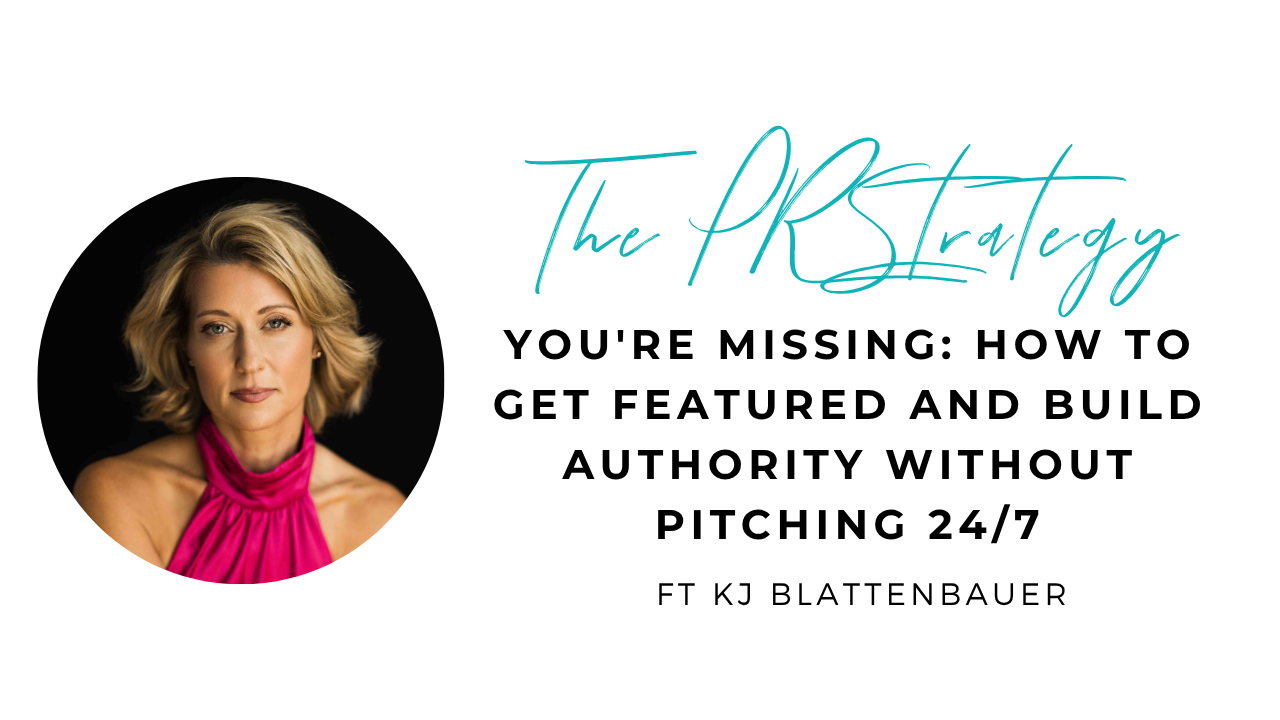
This summer we're running a special series called PR and AI Visibility. Every Monday I'm bringing you a different guest with a different angle on how to get found, get featured, and build real authority without living on social media. Today's guest is KJ Blattenbauer, a publicist with almost 30 years of experience turning overlooked experts into headline news. She's the author of Pitchworthy, and she's here to show you how to get press without pitching 24/7.
About KJ Blattenbauer
KJ Blattenbauer founded Hearsay PR after almost three decades in publicity, and she has spent that career getting overlooked experts into rooms like Forbes, Architectural Digest, and the Today Show. She wrote Pitchworthy to hand business owners the same pitching system she uses with paying clients. Her method starts well before the pitch, with what she calls getting your house in order, so a journalist who looks you up finds one consistent story instead of four different ones. She works with founders who want steady, compounding visibility rather than one viral moment.
How to get press without living on social media
KJ Blattenbauer has spent almost 30 years getting her clients into Forbes, Architectural Digest, and the Today Show, and none of it started with a viral post. In this episode, she walks through what she calls getting your house in order: making sure your positioning statement, your website, your bios, and your media kit all say the same thing before you ever send a pitch. When that's dialed in, one press hit turns into the next, and PR starts to compound.
She also breaks down her actual pitch formula: five sentences, no attachments, and a specific follow up sequence for the days after you hit send. KJ shares her free tool for landing press without an agency, why she treats rejection as data instead of drama, and where AI genuinely helps her business, and where it makes a pitch sound like a robot wrote it.
What makes this one useful is how unglamorous the system is. There is no viral moment in it. KJ's whole argument is that press compounds, that one placement makes the next one easier, and that most people never reach the compounding part because they gave up after a single unanswered email.
Key takeaways from this episode
- KJ Blattenbauer has spent almost 30 years placing clients in outlets including Forbes, Architectural Digest, and the Today Show.
- A pitch should be five sentences, with no attachments and a link to a media kit instead.
- Before you pitch anyone, your positioning statement, website, bios, and media kit all need to say the same thing.
- Following up once or twice over the next couple of weeks is part of the pitch, not a separate step.
- AI is useful for PR research, like building a list of relevant editors or tightening a subject line, and unreliable for writing the pitch itself.
- A rejection from an editor is data about fit and timing, not a verdict on your business.
This episode is for you if
- You are good at what you do and still feel like a best kept secret.
- You sent a pitch, heard nothing back, and assumed that was your answer.
- You want press coverage but do not have the budget for an agency.
Tune in to hear:
- What building a life first business looks like once you stop chasing every opportunity
- The four words KJ uses for getting your positioning, website, and bios all saying the same thing
- Her exact five sentence pitch formula, plus what to send if you don't hear back
- The free tool she uses to land press without an agency
- Why she treats every rejection as data, not drama
- Where AI helps her PR work, and where it makes a pitch sound like a robot wrote it
- The one line she tells herself before a big interview so it's not about her
More in the PR and AI Visibility series: 3 visibility shifts to go from best kept secret to best known · how to use AI for PR without hiring an expensive PR firm
Want the written version of the AI search side of this? Read how to show up in AI search when buyers ask ChatGPT who to hire.
CONNECT WITH KJ:
- KJ's website: hearsaypr.com
- KJ on Instagram: @kjblattenbauer
🔗 LINKS MENTIONED:
🎯 Free Quiz: What's Standing Between You and Consistent Business Income? → hollymariehaynes.com/quiz
👈 Download the Anti-Social Shift Private Podcast → hollymariehaynes.com/shift
🌎 Website → www.hollymariehaynes.com
📲 Instagram → @thehollymariehaynes
🗨️ Chat with Holly → https://www.hollymariehaynes.com/chat
Frequently asked questions
Who is KJ Blattenbauer?
KJ Blattenbauer is a publicist with almost 30 years of experience and the founder of Hearsay PR. She's helped clients land coverage in Forbes and Architectural Digest, and she's the author of the book Pitchworthy. Her work is built around clear positioning and long term visibility instead of one big press hit. She joined the podcast to share how to build real authority without pitching or posting all day.
How do you get press without being on social media all day?
It starts with a clear positioning statement, one line that says who you are, what you do, and who you serve. From there your website, bios, and media kit all need to say the same thing, so a journalist who looks you up sees one consistent story. KJ calls this getting your house in order, and she says it does more for your credibility than daily posting ever could. Once that message is clear, placements and relationships start to compound on their own.
What should a PR pitch email include?
KJ keeps every pitch to five sentences. She opens with something specific from the outlet or podcast to prove she actually paid attention, then states who she is, who she serves, and why the story fits that audience right now. She adds two or three facts and a link to a media kit instead of an attachment. If she doesn't hear back, she follows up once or twice over the next couple weeks instead of giving up after one no.
Is AI good for writing PR pitches?
KJ says AI is genuinely useful for research, like pulling a list of relevant editors or tightening a subject line. Where it falls short is writing the actual pitch, because editors and hosts want a human story, not something that reads like a robot wrote it. Her advice is to write the way you actually talk, since a mismatch between your writing and your voice is easy to spot. Use it to speed up research, not to write your voice for you.
Do you need a publicist to get press?
No, and KJ is a publicist saying so. She shares a free tool in this episode for finding and landing press on your own, and her whole pitch formula is built to be run by the business owner rather than an agency. What an agency buys you is relationships and time, not access you could never get yourself. If your positioning is clear and you are willing to follow up, you can start landing coverage before you ever hire anyone.
What is a positioning statement, and why does it matter for PR?
A positioning statement is one line that says who you are, what you do, and who you serve. It matters for PR because a journalist deciding whether to use you will look at your website, your bios, and your media kit, and any mismatch between them reads as a risk. KJ treats this as the first step of getting your house in order, before a single pitch goes out. Fixing it is unglamorous work that makes every pitch after it land better.
Curious what's actually standing between you and consistent income in your business? Take the free 2-minute quiz and find out where the gap is. → hollymariehaynes.com/quiz 💛